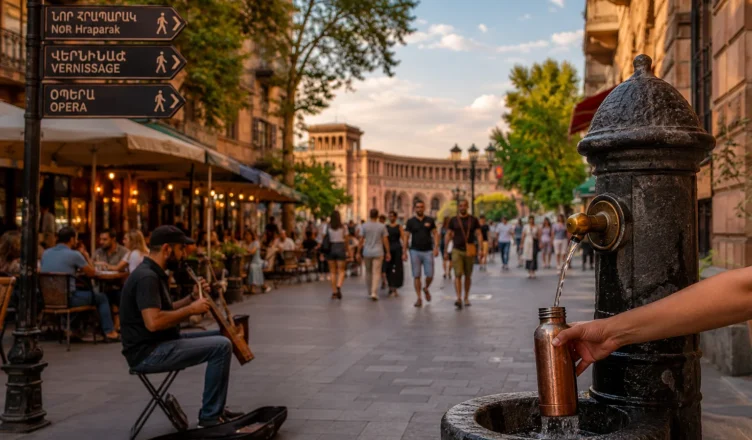
Most visitors arrive in Yerevan ready to see the city.
They photograph the pink-stone buildings around Republic Square, climb the Cascade, visit museums, sit in cafés, and search for the best view of Mount Ararat.
But Yerevan has another side—one that rarely appears in guidebooks or travel photographs.
It is the city you hear.
It begins with the sound of metal shutters opening in the morning, water flowing from a public drinking fountain, coffee cups touching café tables, market sellers greeting familiar customers, and children playing beneath old apartment balconies.
You do not need a ticket or a guide to experience this version of Yerevan. You only need to slow down, put your phone away for a few minutes, and listen.
Start Before the City Fully Wakes Up
The best time to hear Yerevan clearly is early in the morning, before traffic fills the central streets.
Begin your walk around Republic Square between 7:00 and 8:00 a.m. At this hour, the city feels wider and calmer. Cleaning workers prepare the pavements, cafés receive their first deliveries, and the sound of footsteps carries farther across the square.
From Republic Square, walk along Abovyan Street.
Later in the day, this area becomes busy with shoppers, tourists, taxis, and café guests. In the morning, however, you can hear smaller details: keys turning in shop doors, chairs being placed outside, bread being delivered, and short conversations between people starting their working day.
This is not the dramatic Yerevan shown in promotional videos. It is the ordinary city—and that is precisely what makes it interesting.
Follow the Sound of Water
On hot summer days, one of Yerevan’s most comforting sounds is running water.
Public drinking fountains, locally known as pulpulaks, can be found in parks, residential streets, and busy central areas. Locals rarely make a ceremony of using them. They stop, drink, and continue on their way.
For visitors, the experience can feel surprisingly memorable.
The sound of cool water against stone offers a moment of relief from the dry heat. It also reveals an important part of the city’s character: water is treated not as a luxury, but as something that should be shared.
Carry a reusable bottle and refill it where drinking water is clearly provided. During the hottest months, it is better to explore in the morning and late afternoon rather than walking for hours under the midday sun.
Listen to Vernissage Before Looking for Souvenirs
Vernissage Market is usually presented as a place to buy handmade jewelry, carpets, paintings, wooden objects, antiques, and traditional souvenirs.
But before examining the stalls, listen.
You will hear sellers greeting one another, explaining the history of an object, discussing prices, and switching naturally between Armenian, Russian, English, and sometimes French.
Some conversations are businesslike. Others sound like exchanges between old friends.
The market is most enjoyable when you do not rush. Ask polite questions, take time to look closely, and request permission before photographing individual sellers or their work.
Even when you buy nothing, Vernissage can teach you something about Armenian communication. Conversations often begin formally and become warm within minutes.
Hear How Yerevan’s Cafés Change During the Day
Yerevan’s café culture is not limited to food and coffee. Cafés function as social spaces, informal offices, meeting points, and places where long conversations are allowed to unfold without pressure.
In the morning, cafés sound quiet and practical. You may hear espresso machines, laptop keyboards, and soft conversations between colleagues.
By afternoon, the rhythm changes. Tables fill with friends, families, and visitors resting after walking through the center.
In the evening, café terraces around the Opera House, Northern Avenue, and the Cascade become part of the street itself. Music, conversation, passing cars, and footsteps blend together.
There is no need to choose the most fashionable café. A small table with a view of the pavement often offers a better feeling for the city than an expensive rooftop restaurant.
Order something simple and stay long enough to notice how the street changes around you.
Step Away from the Main Avenues
Yerevan becomes more personal when you leave the polished central streets and enter quieter residential areas.
Behind apartment buildings, you may hear children playing, neighbors speaking from balconies, a television through an open window, someone repairing furniture, or dishes being prepared for a family meal.
These courtyards are not official attractions. They are shared living spaces.
Visitors should move through them respectfully, avoid loud conversations, and never treat residents as part of a tourist display. Do not point cameras into windows or record private conversations.
The goal is not to collect unusual photographs. It is to understand that Yerevan’s strongest sense of community often exists away from its grandest buildings.
Spend Time at the GUM Market
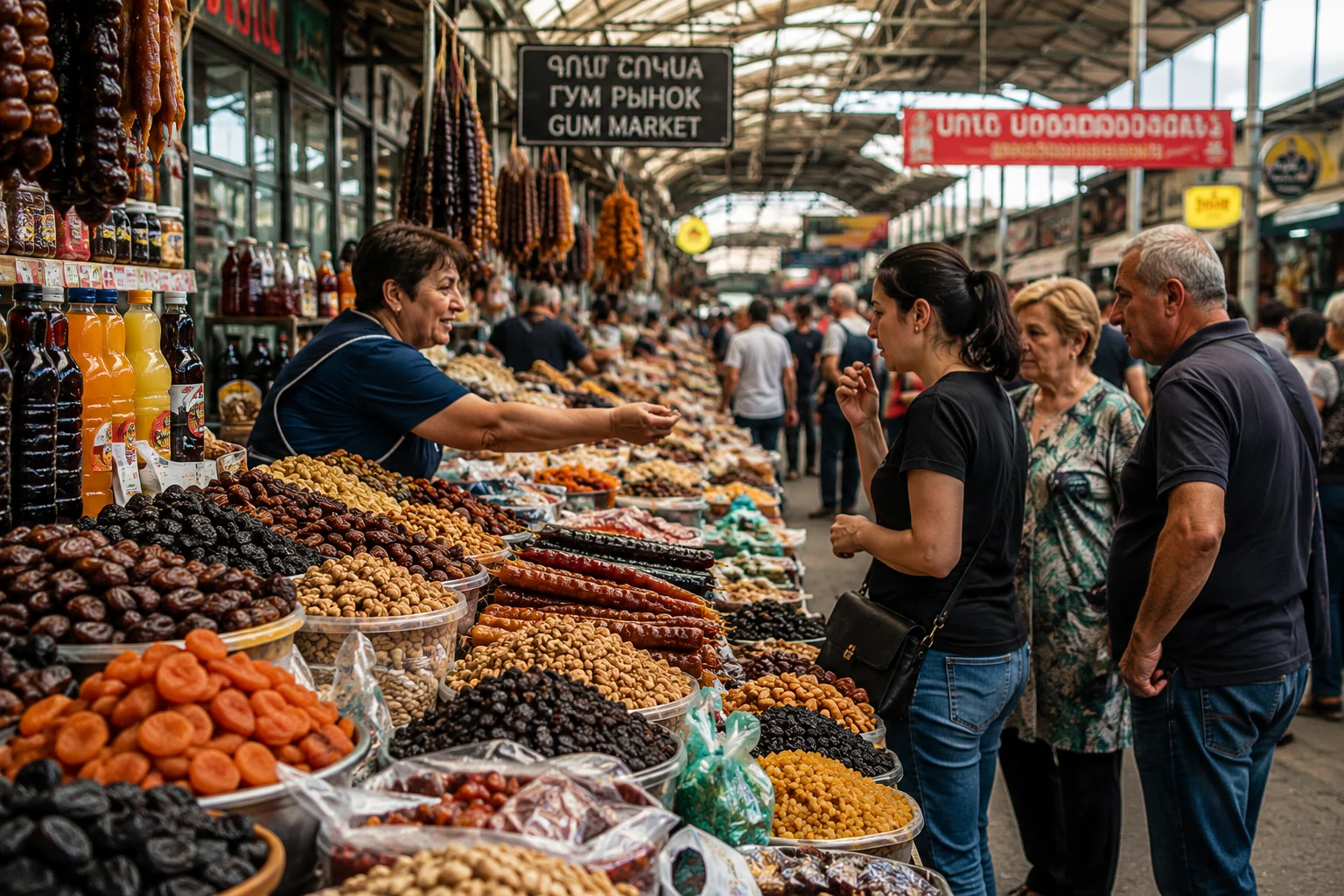
For a richer mix of voices, aromas, colors, and everyday activity, visit the GUM Market on Movses Khorenatsi Street.
Inside, sellers offer dried fruit, herbs, spices, sujukh, basturma, cheeses, nuts, sweets, and seasonal produce. Vendors may invite you to taste something before buying, while regular customers discuss quality and compare products.
The experience changes throughout the year.
Summer brings apricots, peaches, berries, and herbs. Autumn adds grapes, figs, and pomegranates. During colder months, dried fruit, preserves, nuts, and cured products become more prominent.
Prices may not always be displayed clearly, so ask before purchasing. A few Armenian words are appreciated, but simple English, Russian, gestures, and a friendly attitude usually work well.
The market is at its best when you treat it as a place to learn, not merely a shopping stop.
Let Street Music Interrupt Your Route
Near Northern Avenue, the Opera area, underground passages, and the Cascade, you may encounter musicians performing classical melodies, traditional Armenian music, jazz, or modern songs.
Do not hurry past automatically.
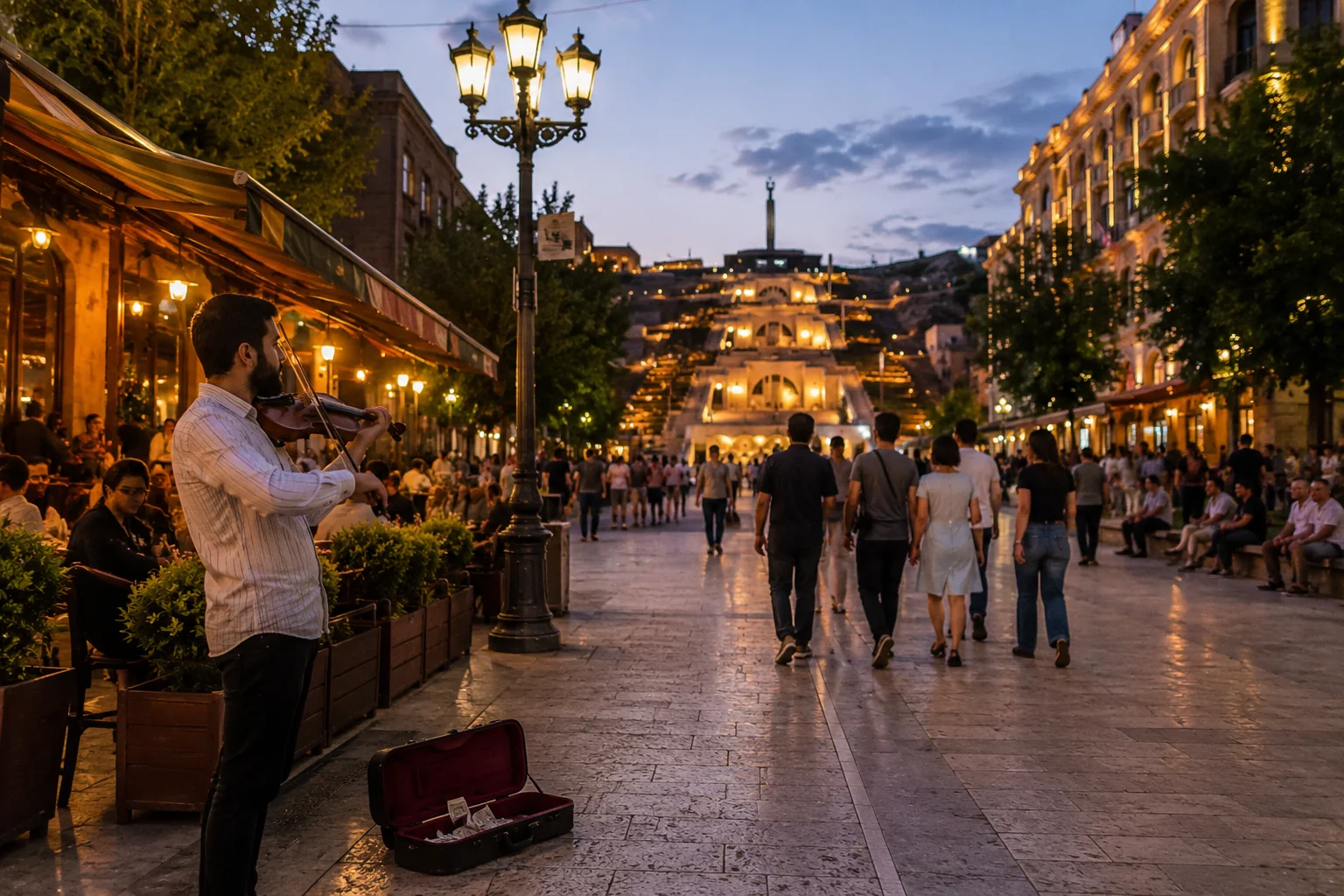
Street music changes the atmosphere of Yerevan in a way no monument can. People slow down, children begin to dance, and strangers briefly share the same experience.
Some performances attract large crowds. Others are heard by only a few passersby.
When you enjoy a performance, a small contribution is a respectful way to show appreciation. Avoid blocking the pavement or filming performers from extremely close range without consent.
The best moments often happen when you were planning to go somewhere else.
Notice the Difference Between Day and Evening
Yerevan’s sound changes noticeably after sunset.
The heat softens, families enter parks, cafés become busier, and public spaces fill with people. Around the Cascade and Opera House, conversations and music may continue late into the evening.
Republic Square becomes especially lively when visitors gather near the fountains. Yet just a few streets away, the city can become quiet again.
This rapid transition is one of Yerevan’s most distinctive qualities. Within a ten-minute walk, you can move from a crowded square to a calm street where footsteps echo between stone buildings.
Central Yerevan is generally comfortable for evening walks, but normal travel precautions still matter. Keep your valuables secure, use well-lit routes, and check the latest public transport schedule before staying out late.
A One-Day Listening Route Through Yerevan
Travelers who want to experience this quieter side of the city can follow a simple route:
Begin at Republic Square early in the morning and continue along Abovyan Street while the shops and cafés are opening.
Walk toward Vernissage Market and spend time listening to conversations between sellers and visitors.
Continue to the GUM Market to experience the louder, more energetic sound of local trade.
After lunch, rest in a café near the Opera House or Cascade and notice how the atmosphere changes as more people enter the streets.
In the evening, walk through Northern Avenue toward Republic Square. Stop when you hear music rather than following a fixed schedule.
This route is compact, mostly walkable, and does not depend on expensive attractions. It can also be divided into two shorter walks during very hot weather.
Travel With Curiosity, Not Intrusion
Listening to a city can create a deeper connection, but it also requires respect.
Avoid secretly recording conversations. Ask before taking close-up photographs of people. Keep your voice low inside residential courtyards and apartment entrances.
Do not assume that every local tradition exists for visitors.
The most meaningful travel experiences often come from observing ordinary life without interrupting it.
The Yerevan That Stays With You
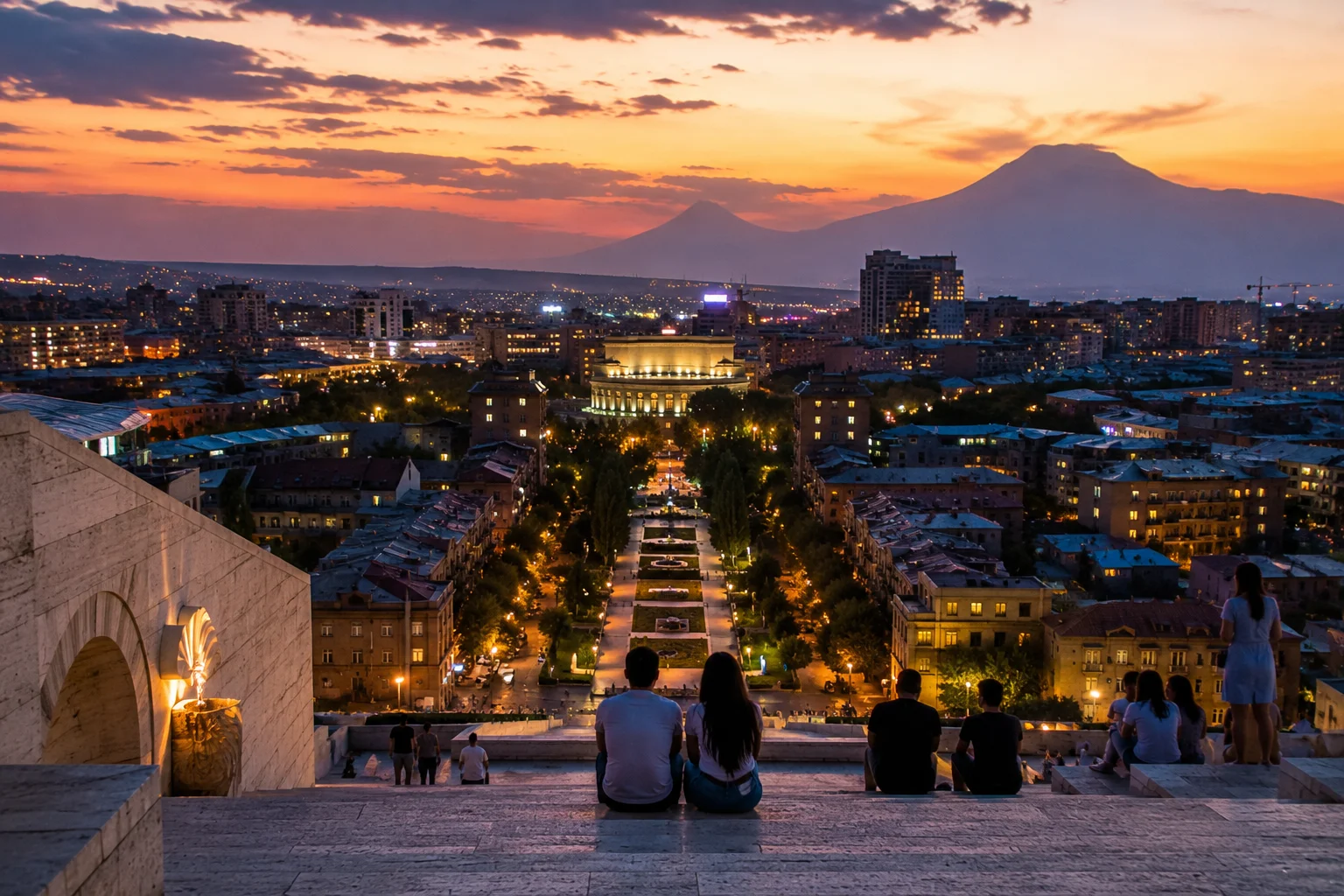
After returning home, you may remember the Cascade, Republic Square, and the view toward Mount Ararat.
But smaller memories can remain just as powerful.
You may remember water flowing from a fountain on a hot afternoon. The voice of a market seller offering dried apricots. The sound of a violin near the Opera House. The clinking of coffee cups while an evening crowd slowly filled the pavement.
Yerevan is not only a city of pink stone, ancient history, and famous landmarks.
It is also a city of voices, footsteps, music, water, open windows, morning routines, and long conversations.
Sometimes the best way to understand it is not to search for another attraction.
It is simply to stop—and listen.
Discover more from YEREVAN INFO
Subscribe to get the latest posts sent to your email.